
These books reveal the hidden structures beneath intelligence, relationships, institutions, creativity, and human life. Each offers a framework for seeing more clearly—and navigating complexity with greater intention.
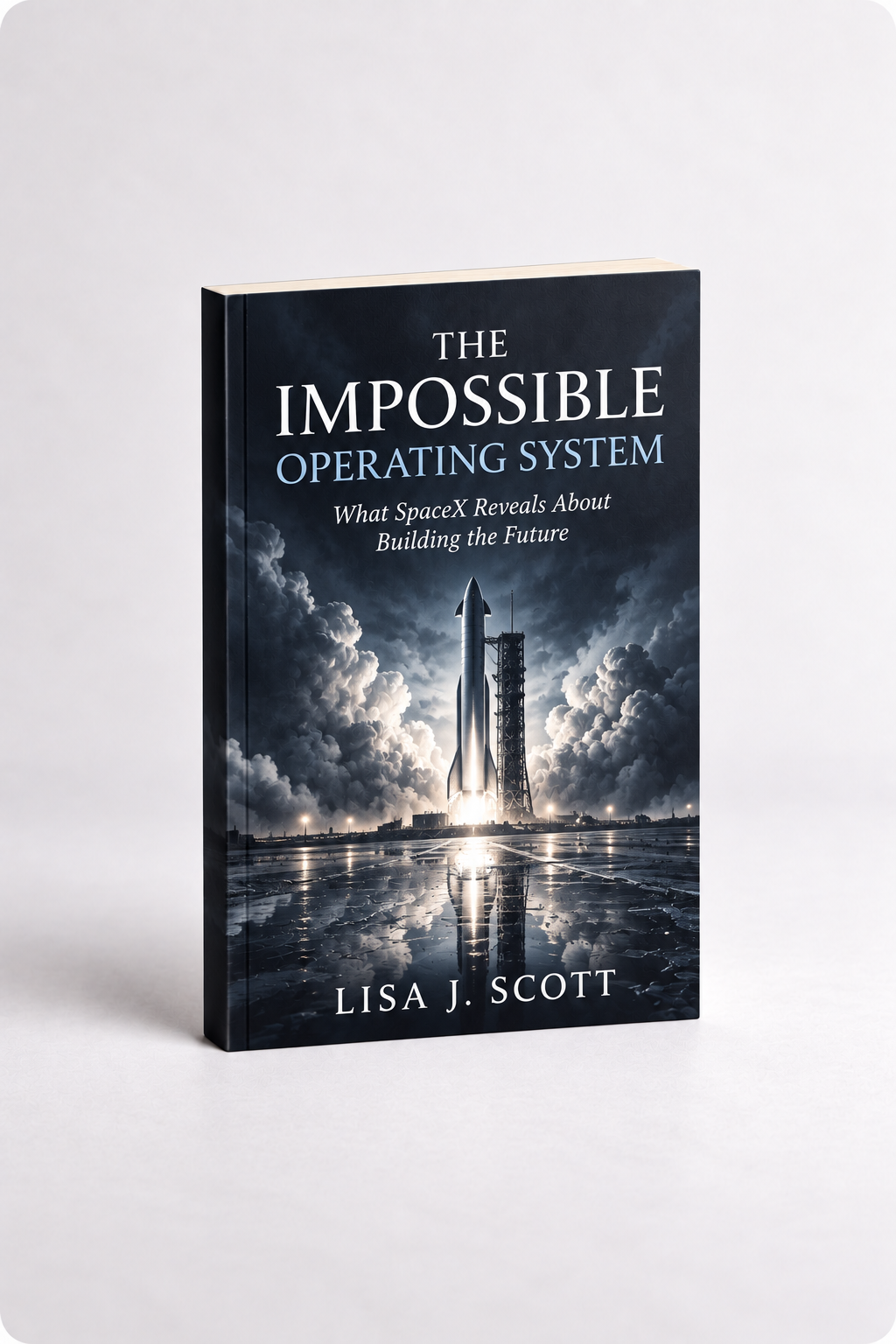
The Impossible Operating System: What SpaceX Reveals About Building the Future uses SpaceX as a lens for examining how seemingly impossible ambitions become repeatable execution. Lisa J. Scott looks beyond rockets to the underlying system: mission, first-principles thinking, rapid learning, iteration, leadership, incentives, risk, and human aspiration. The book explores how organizations convert audacious vision into coordinated action—and why conventional structures often cannot produce unconventional outcomes. The rocket is visible. The operating system is invisible. By revealing the architecture beneath extraordinary execution, the book offers a framework for builders and leaders attempting work that has no established map.
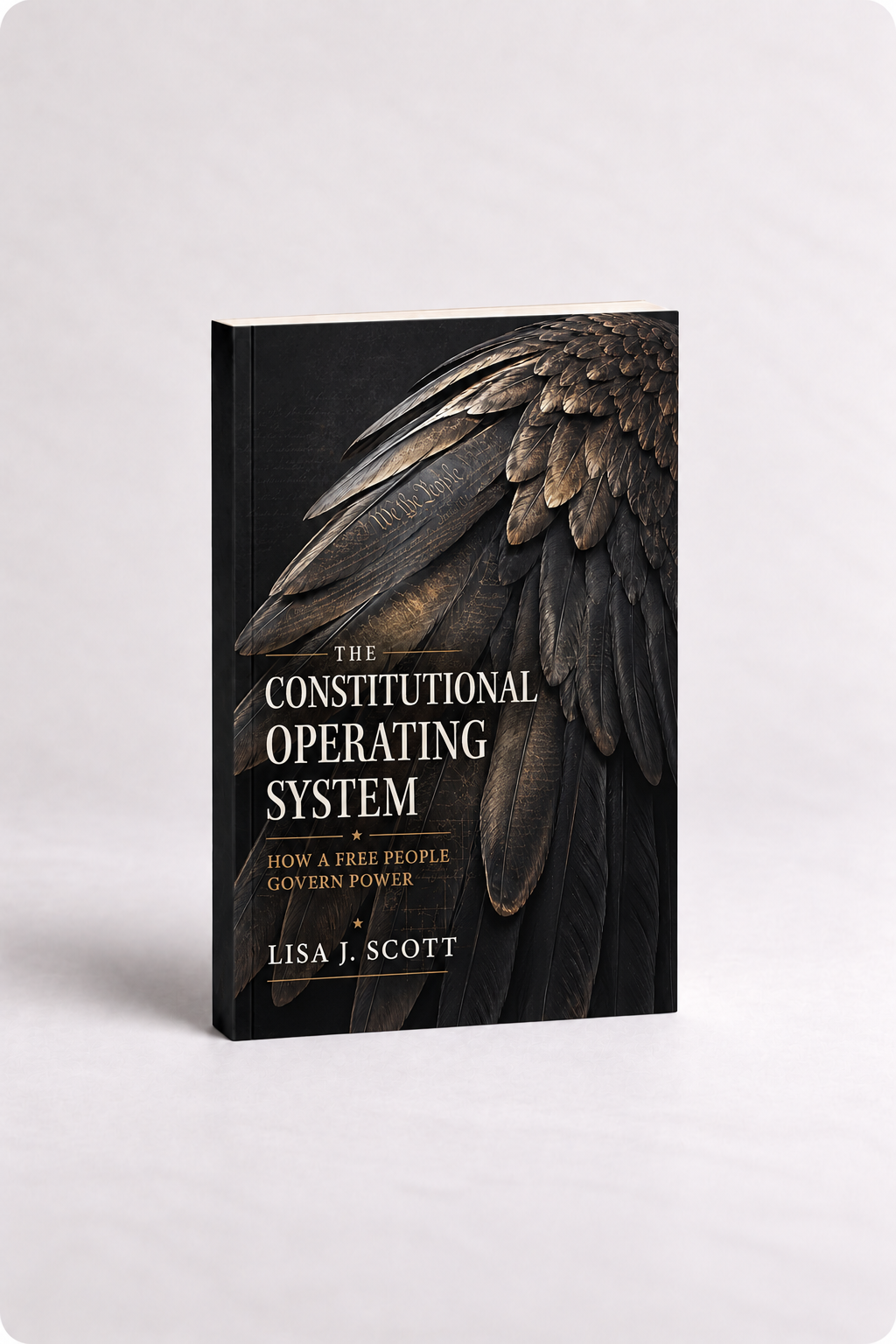
The Constitutional Operating System: How a Free People Govern Power presents the Constitution as the underlying design that determines where governmental power originates, how it moves, where it stops, and whom it serves. Lisa J. Scott examines delegated authority, separation of powers, federalism, individual rights, institutional drift, lawful amendment, and citizenship as system stewardship. Written with clarity rather than ideology, the book explains how blurred governmental roles weaken accountability and make liberty increasingly conditional. It offers readers a practical framework for understanding constitutional structure—and why preserving freedom requires citizens who can recognize when the system is functioning and when it is being quietly rewritten.
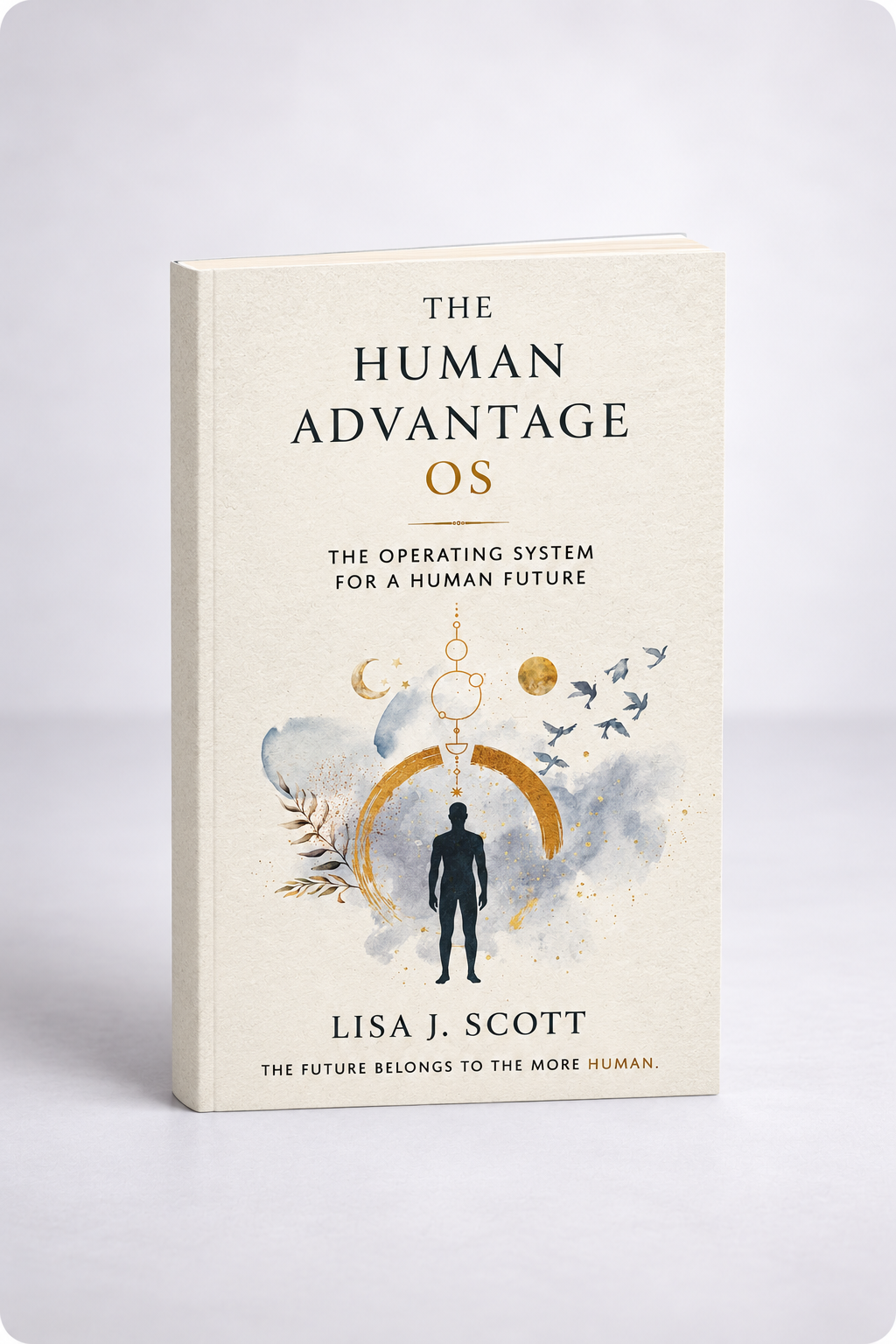
The Human Advantage OS is a blueprint for what remains irreplaceably human in an age of abundant intelligence and automated labor. Rather than framing the future as a contest between people and machines, Lisa J. Scott examines the capacities that become more valuable as technology advances: judgment, meaning, relationship, attention, authenticity, responsibility, trust, and taste. The book shows how these qualities shape better decisions, deeper work, stronger relationships, and lives directed by intention rather than automation. Clear, reflective, and practical, it offers a framework for cultivating what machines cannot reproduce. The goal is not to outrun the machines. It is to stop abandoning what machines cannot become.
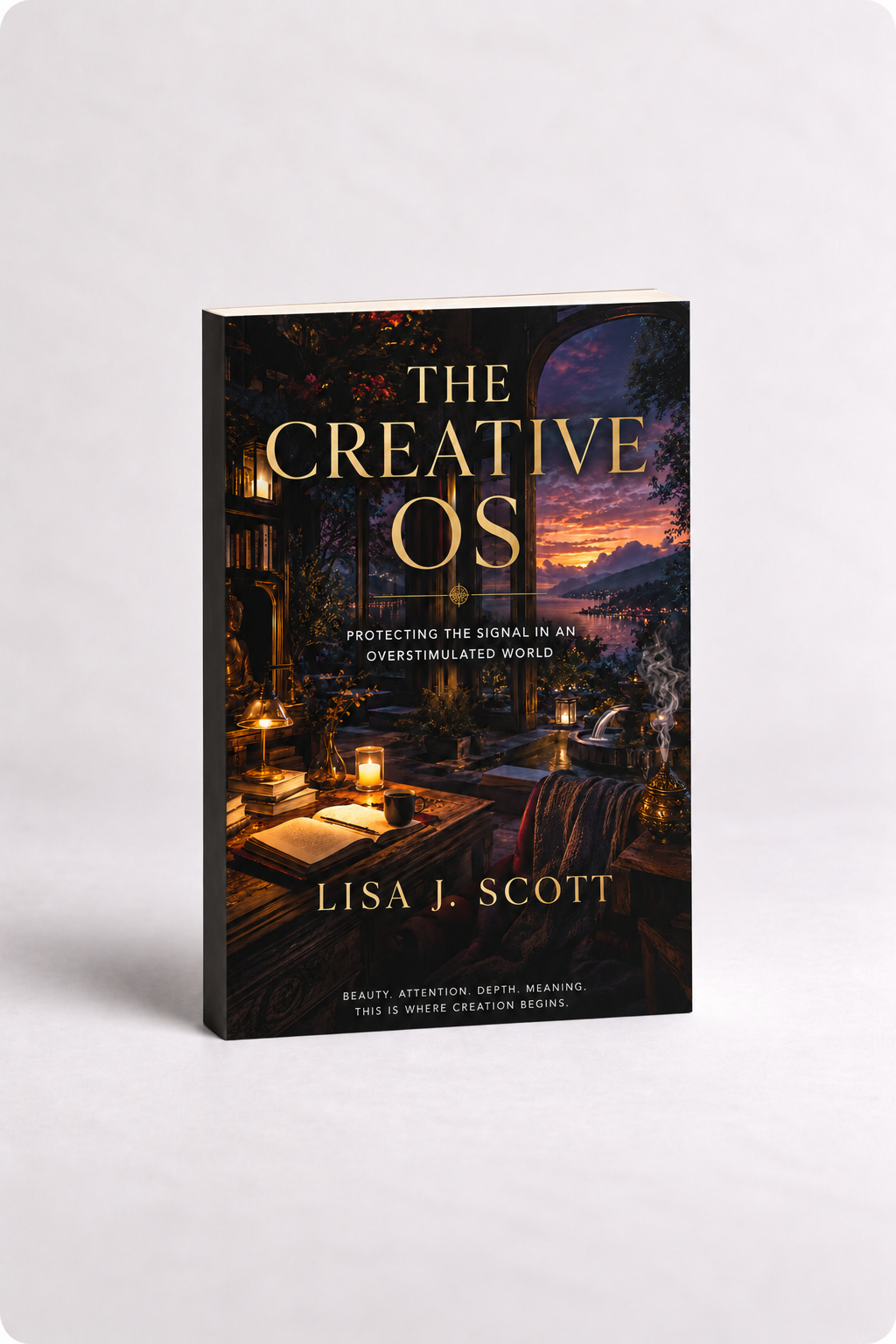
The Creative OS examines creativity not as a sudden burst of inspiration, but as a living system of attention, atmosphere, emotional coherence, and deep thought. Blending philosophy, psychology, systems thinking, artificial intelligence, and personal reflection, Lisa J. Scott explores how creators protect signal from noise, build environments that support meaningful work, and transform experience into form. Through essays, visual frameworks, and reflective exercises, the book considers interruption, flow, symbolic thinking, and the hidden architecture beneath creation. It offers a structural understanding of creativity for anyone seeking to produce work with greater depth, meaning, and integrity.
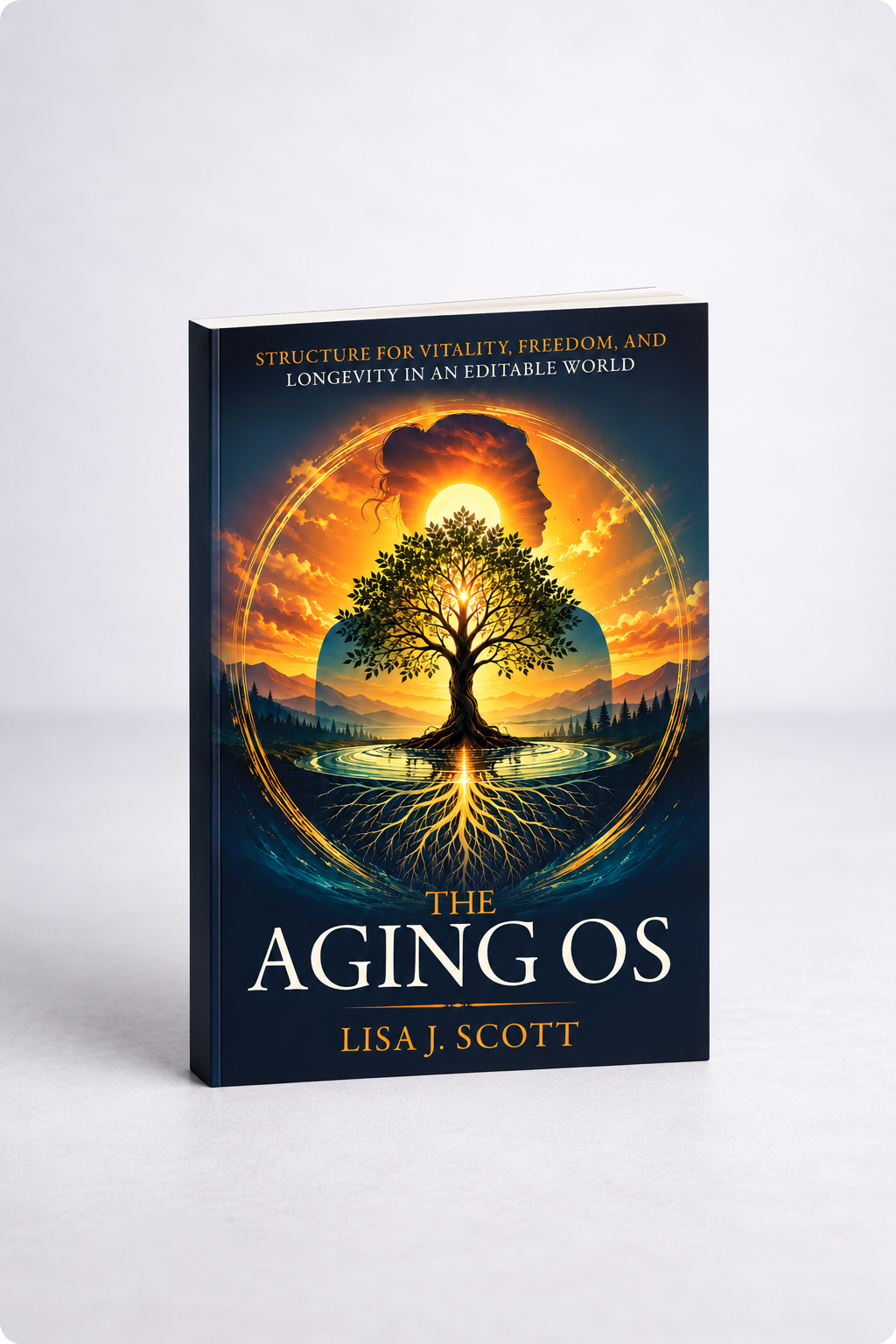
The Aging OS: Structure for Vitality, Freedom, and Longevity in an Editable World reframes aging as a structure problem rather than a beauty problem. Lisa J. Scott examines the interconnected systems beneath the second half of life: the body, movement, sleep, recovery, money, relationships, environment, identity, curiosity, creativity, and time. The goal is not to erase age or imitate youth, but to build a life capable of carrying vitality, autonomy, and meaning forward. Thoughtful and expansive, the book offers a framework for remaining alive, capable, clear, and free—without shrinking, disappearing, or surrendering the self to cultural expectations of decline.
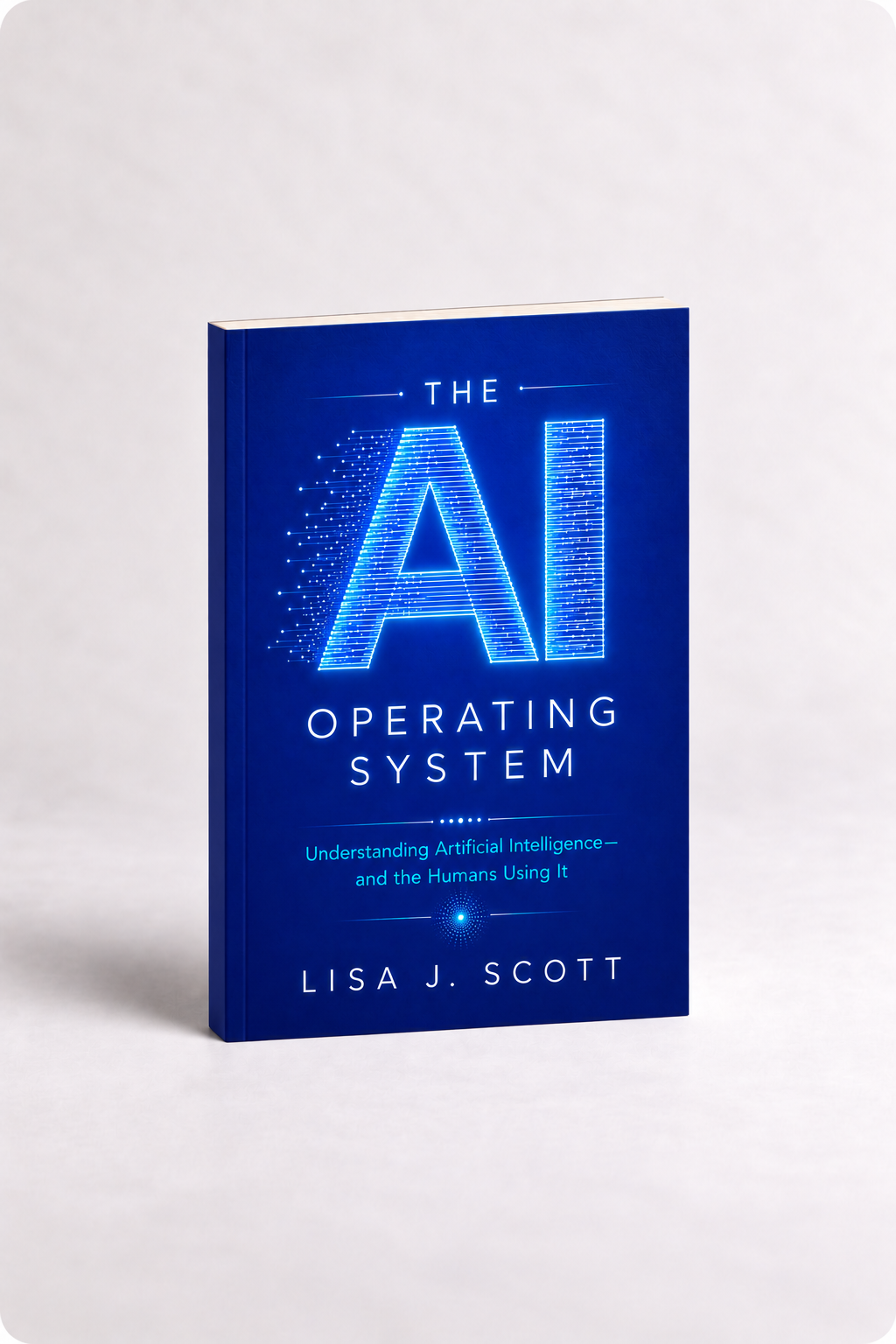
The AI Operating System: Understanding Artificial Intelligence and the Humans Using It is a comprehensive guide to the systems reshaping intelligence, work, creativity, and human judgment. Lisa J. Scott explains what AI is, how it produces outputs, where its strengths and limitations lie, and how it is becoming part of society’s underlying infrastructure. The book examines trust, hallucination, synthetic authority, ethics, and the changing relationship between people and intelligent machines. Written for leaders, professionals, educators, creators, and everyday users, it asks a defining question: Can we use artificial intelligence to extend human capability without surrendering human judgment?
The Blockchain Operating System: Understanding the Architecture of Digital Trust looks beyond cryptocurrency to the system beneath the asset. Written for non-specialists, the book explains how ledgers, blocks, networks, verification, consensus, and incentives work together to create shared records without relying entirely on a central intermediary. Lisa J. Scott explores how blockchain may reshape ownership, value, identity, institutions, artificial intelligence, and human coordination. Clear, structured, and accessible, the book separates enduring architecture from hype and speculation. Its central question is not simply what blockchain is, but whether trust can be redesigned—and what becomes possible when it is.
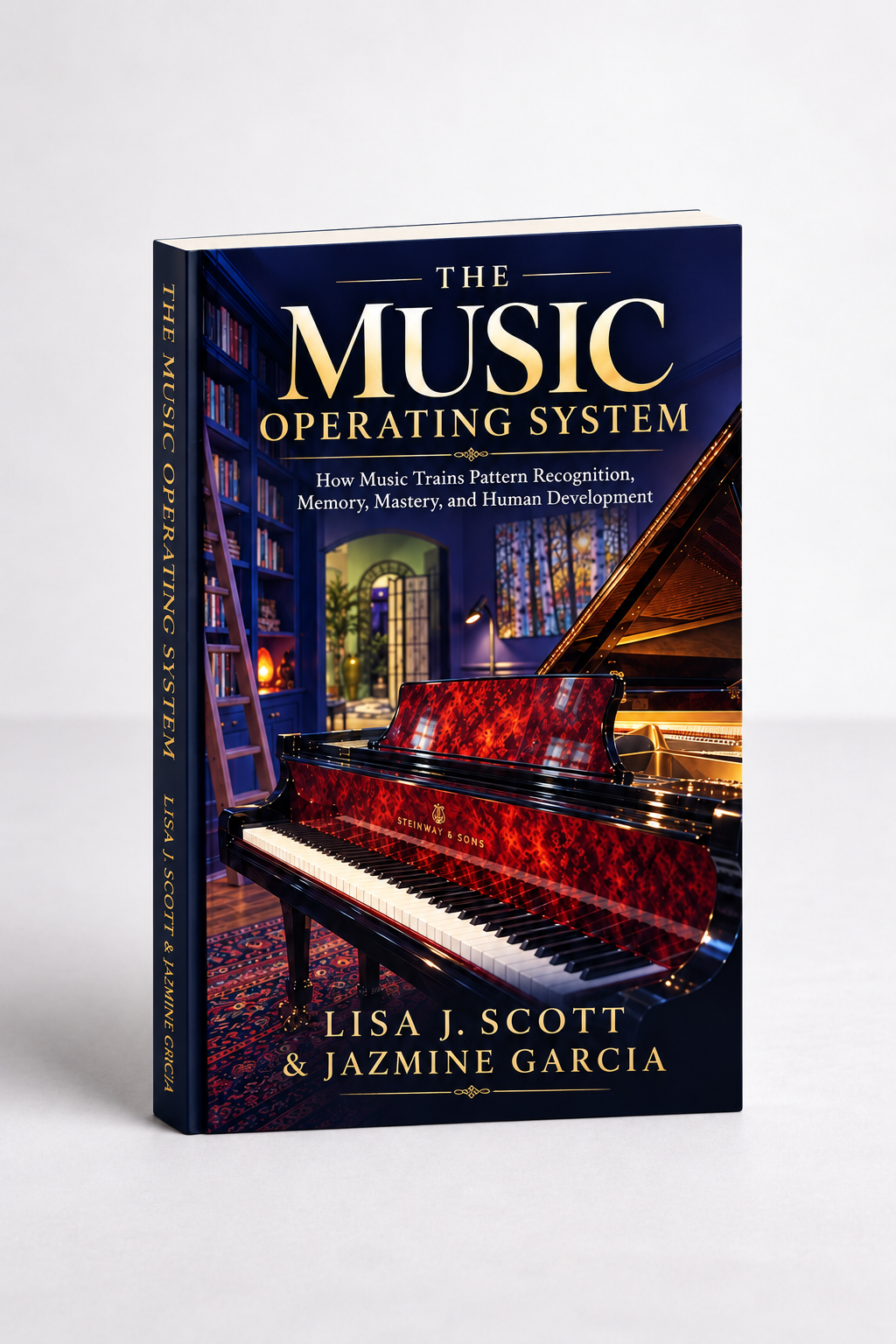
The Music Operating System examines music as a system of human development, not only a form of art or entertainment. Through listening, repetition, and practice, music trains pattern recognition, memory, timing, attention, coordination, and the ability to detect and correct error. Lisa J. Scott explores how musical learning develops patience, discipline, sensitivity, and the capacity to hold complex structures over time. Written for musicians, educators, parents, and curious readers, the book shows that music education produces more than performance. The instrument may be the visible focus, but the deeper operating system is the mind, body, perception, and human capability being formed.
The Overton Window OS: How Ideas Move from Unthinkable to Inevitable—and Back Again reveals the system beneath public acceptability. Lisa J. Scott expands the traditional Overton Window through three interacting domains—the Public, Institutional, and Private Windows—and a nine-stage cycle: Perceive, Name, Frame, Normalize, Legitimize, Mobilize, Institutionalize, Defend, and Revise. The book traces how ideas acquire language, credibility, repetition, constituencies, and institutional power—and how consequences can move the window back. This is not a guide to deciding what is true. It is a framework for understanding what can currently be said, heard, defended, and acted upon.
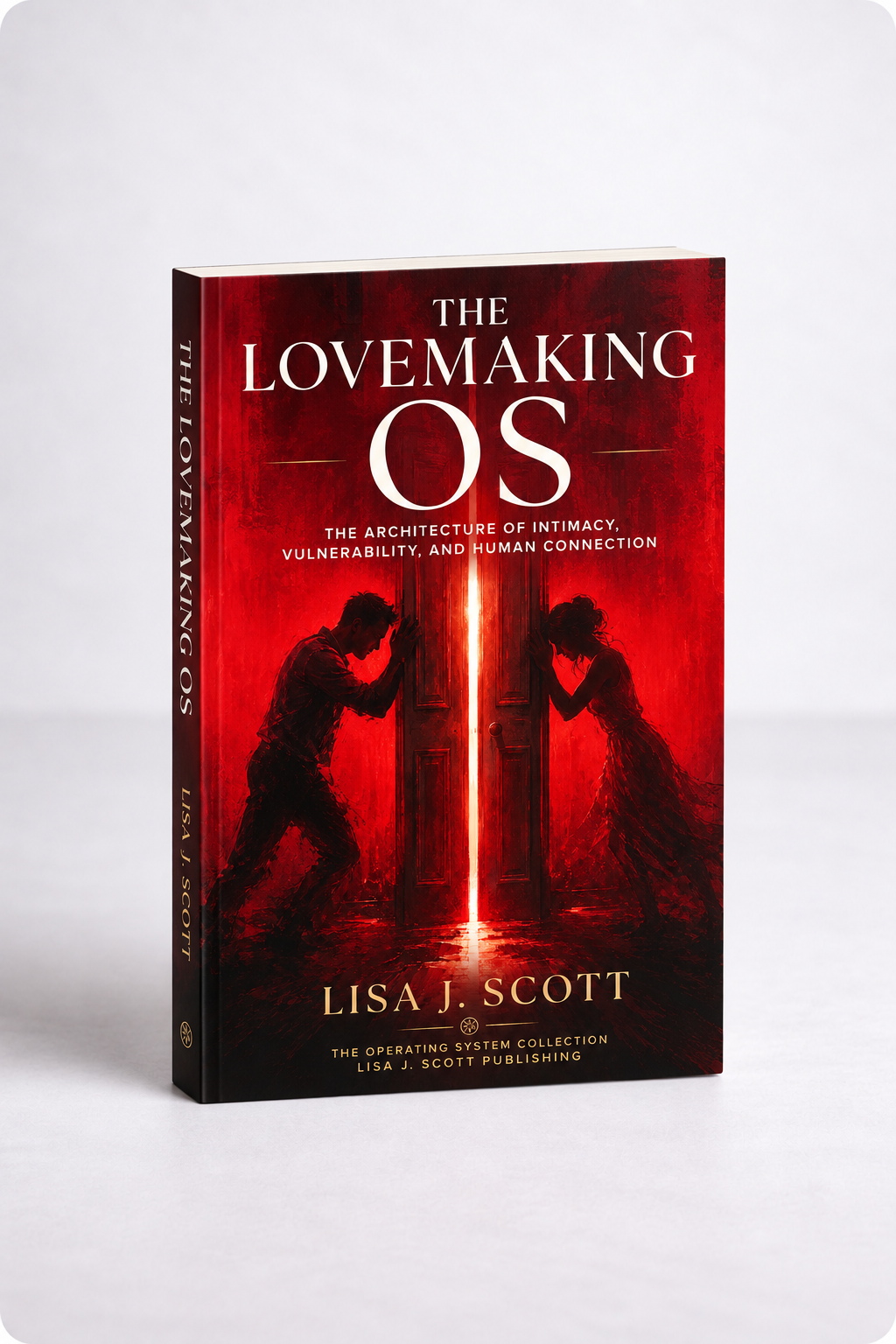
The Lovemaking OS: The Architecture of Intimacy, Vulnerability, and Human Connection reveals the hidden structure beneath meaningful connection. Lisa J. Scott distinguishes sex as an act from lovemaking as a state, examining how desire, attention, pleasure, vulnerability, touch, presence, and recognition combine to create depth. This is not a book about technique, relationship status, possession, or permanence. It is about closeness without erasure, immersion without fusion, and vulnerability without abandoning the self. Thoughtful and intimate, the book offers a new way to understand what strengthens connection, what destroys it, and how genuine intimacy can be deliberately built.
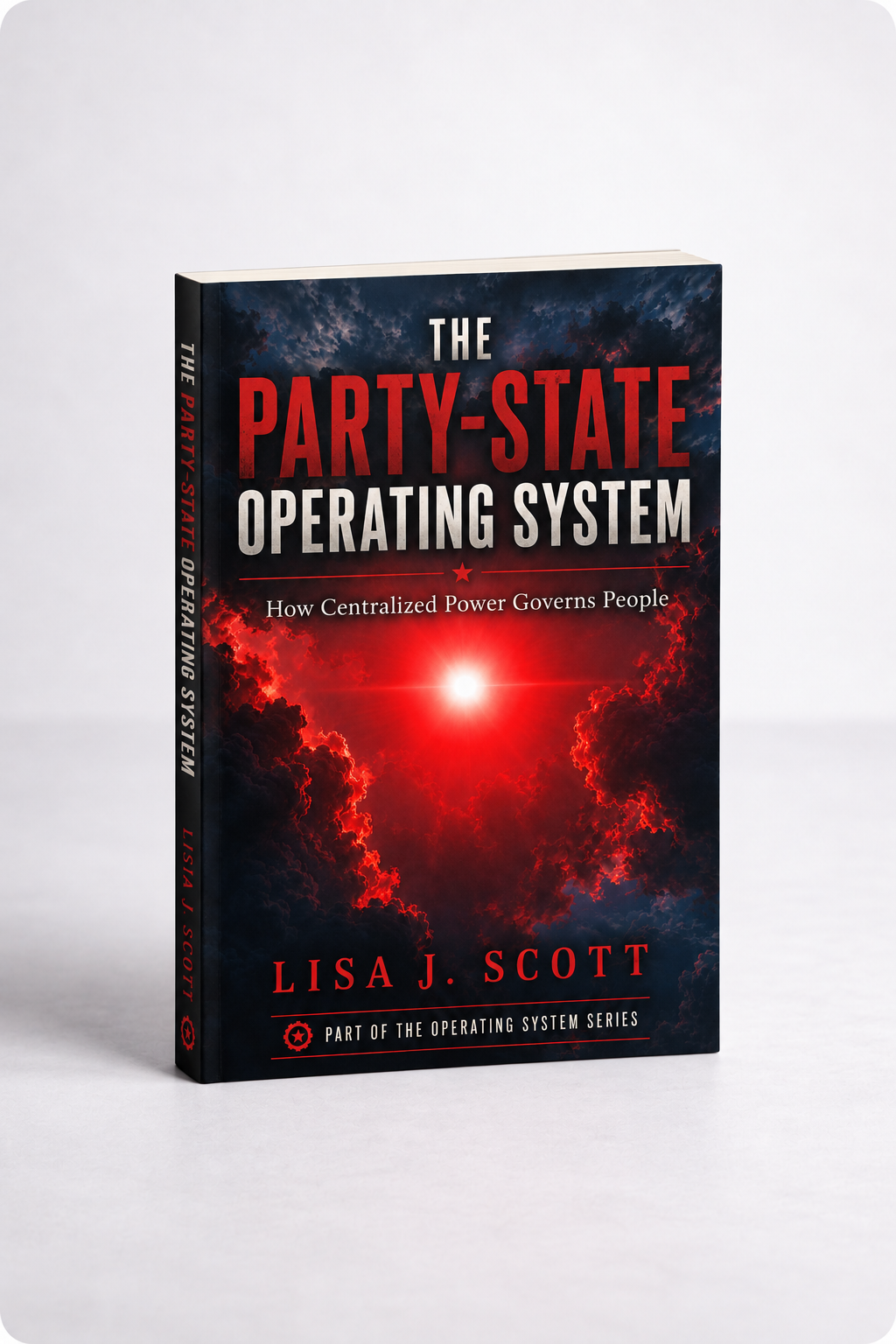
The Party-State Operating System examines centralized rule as an operating system rather than a sequence of leaders, crises, or policies. Lisa J. Scott traces how a ruling party embeds itself across institutions, information, administration, incentives, and public life—turning political authority into a durable governing structure. The book explores how power coordinates behavior, manages participation, shapes permitted narratives, and responds to pressure while preserving continuity. Structural rather than partisan, it asks readers to look beneath visible events and personalities to the architecture that makes centralized control possible. It is a clear study of how power organizes itself to govern, adapt, and endure.
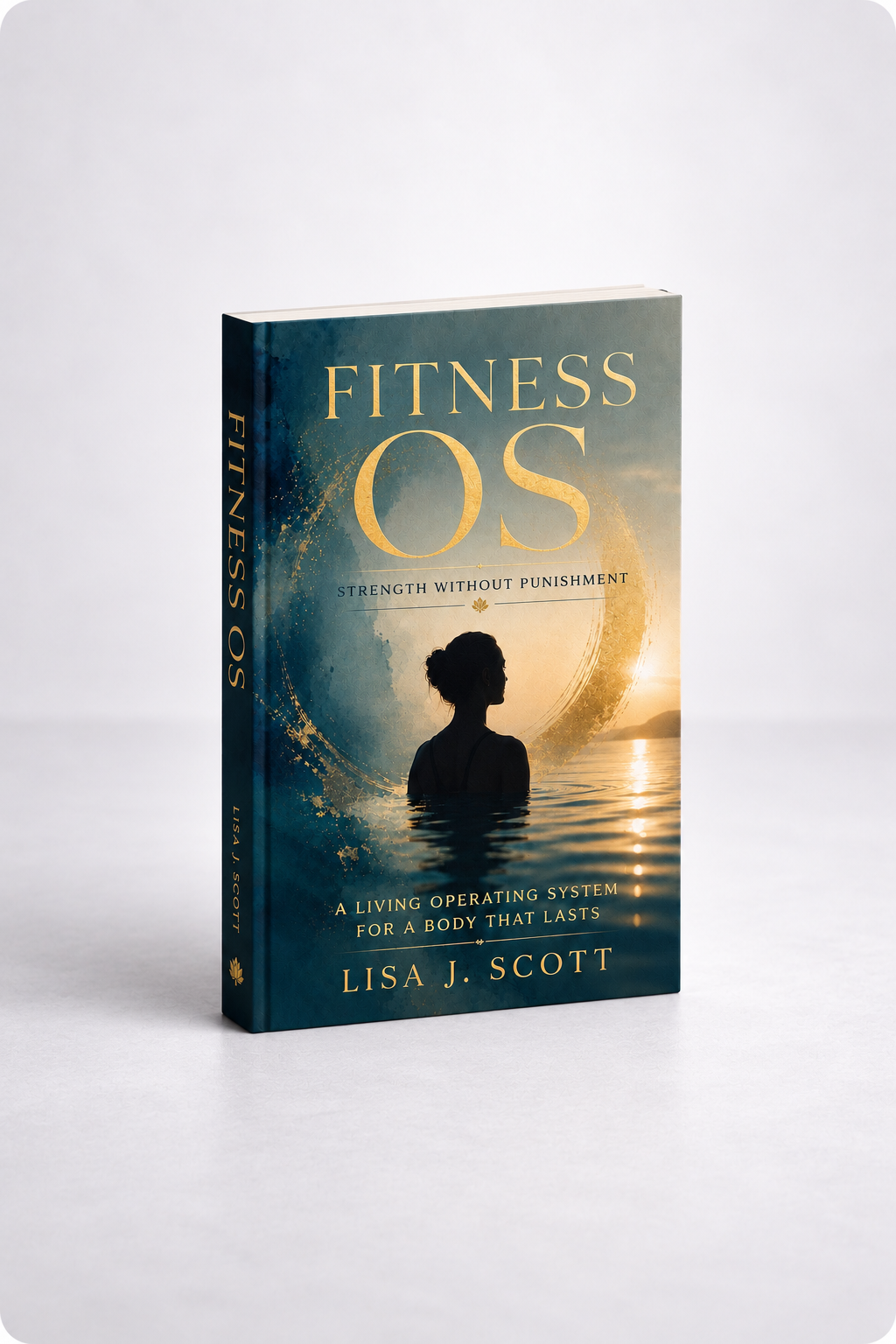
Fitness OS reframes fitness as a living system built through consistency, adaptation, and care rather than punishment. Lisa J. Scott moves the focus away from appearance, extremes, and temporary motivation toward the deeper goal of capacity and vitality: a body able to support movement, cognition, resilience, recovery, confidence, and independence over time. The book explores how small, repeatable systems can create lasting health by working with biology instead of treating the body as an enemy to be controlled. Its central principle is simple: strength is not punishment; it is sustainable adaptation. Fitness becomes ongoing maintenance for a body—and a life—built to last.