
Books about building a life from the inside out through freedom, leadership, enterprise, and execution. This collection explores what becomes possible when people stop waiting for permission and begin directing their own lives.
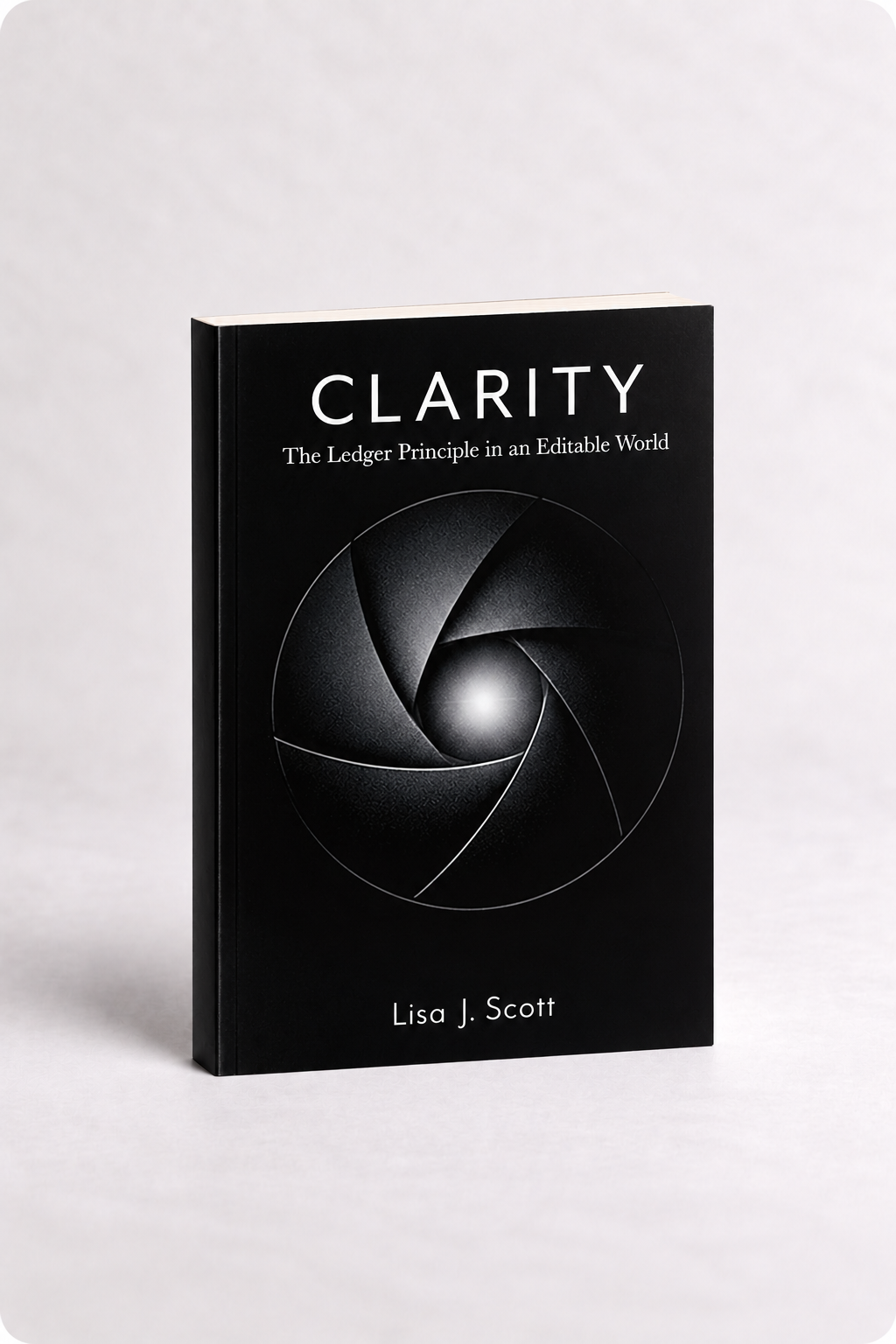
CLARITY examines what it means to see clearly in an editable world shaped by noise, performance, and invisible systems. Through reflections on relationships, institutions, money, technology, and personal expectations, Lisa J. Scott shows how easily appearance can be mistaken for truth and confidence for coherence. The book offers a framework for defining terms, separating observation from conclusion, choosing the right time horizon, recognizing self-deception, and identifying the next right step. Both a mirror and a method, Clarity helps readers distinguish what is being presented from what is actually present.
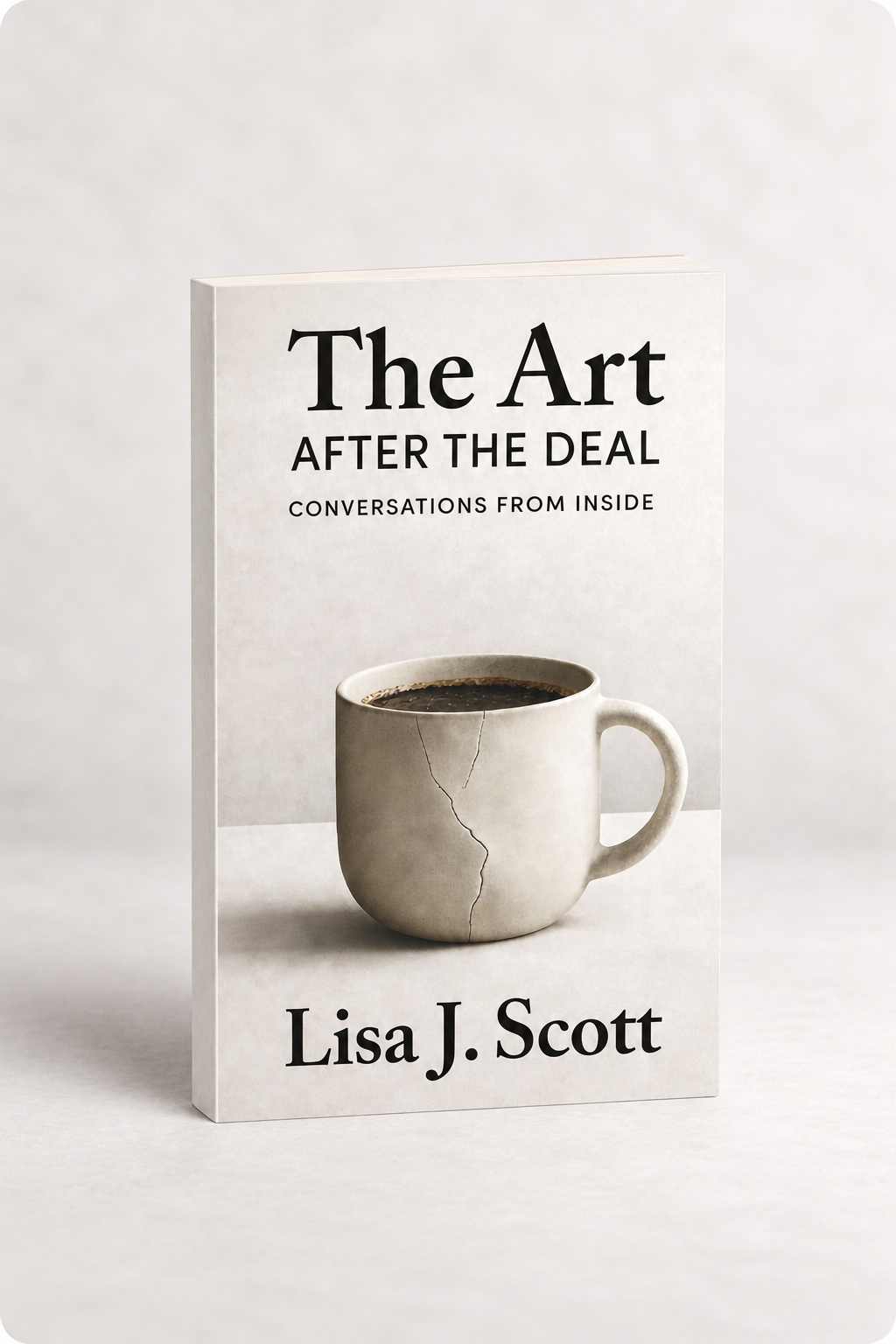
The Art After the Deal: Conversations from Inside examines what remains when the transaction is over and the real work of change begins. Drawing from moments inside complex organizations, Lisa J. Scott observes the human terrain following mergers, carve-outs, integrations, restructurings, and decisions already made. She traces how people listen more carefully, speak less freely, and adapt before they fully understand why. These are not prescriptions, but recognitions of patterns that repeat across companies, roles, and industries. Written for leaders, operators, and professionals navigating transition, the book offers language for the uncertainty people often feel before it can be named.
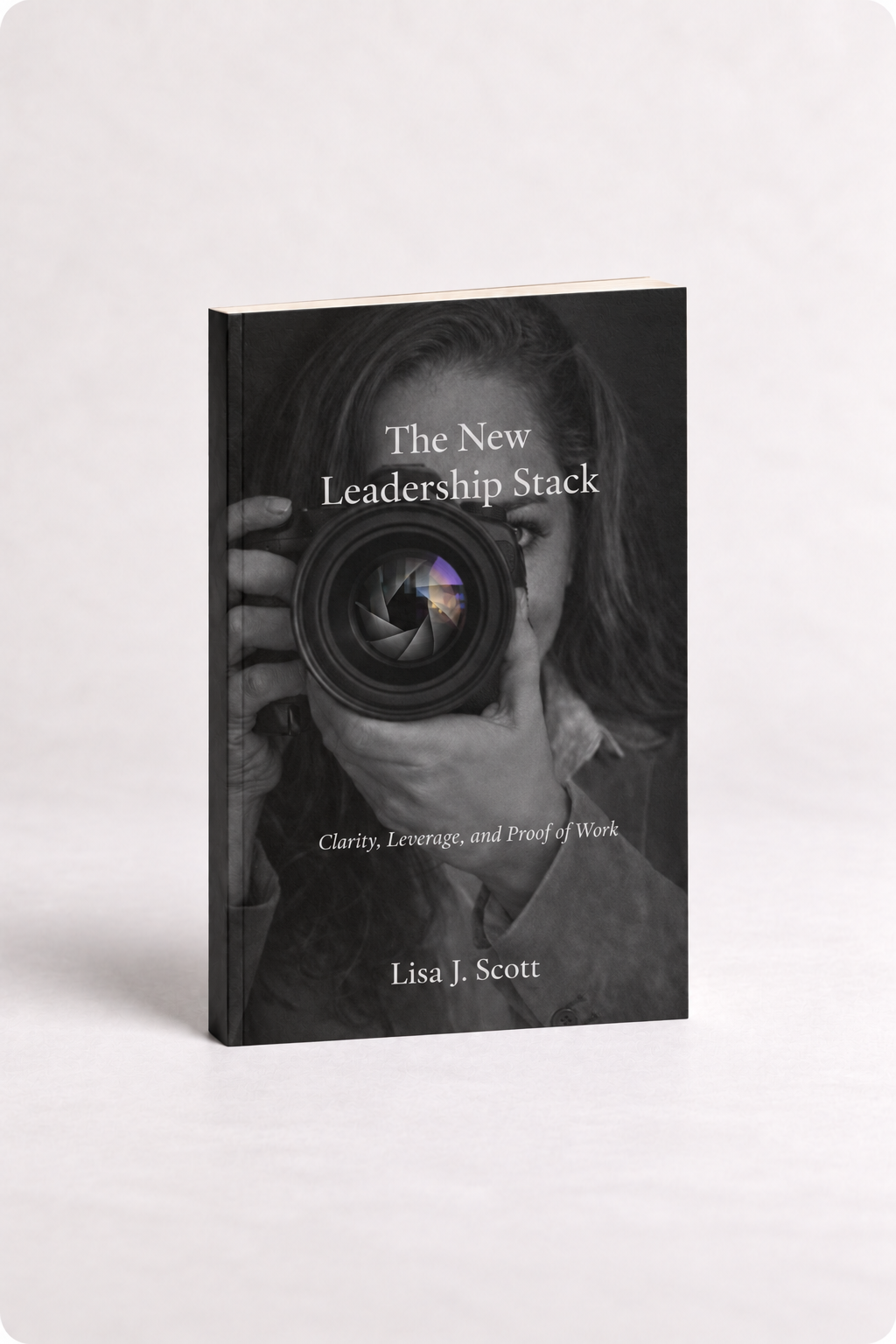
The New Leadership Stack redefines leadership for an era shaped by artificial intelligence, information abundance, accelerating technology, and constant distraction. Traditional signals such as titles, credentials, and institutional prestige may still matter, but they no longer guarantee capability. Lisa J. Scott identifies the qualities modern leadership requires: clarity, sound judgment, responsible leverage, proof of work, independent thinking, and trustworthiness under pressure. Written for builders, operators, founders, professionals, educators, and emerging leaders, the book examines how power fails when it outpaces wisdom. This is not a framework for becoming more visible. It is a framework for becoming more capable.
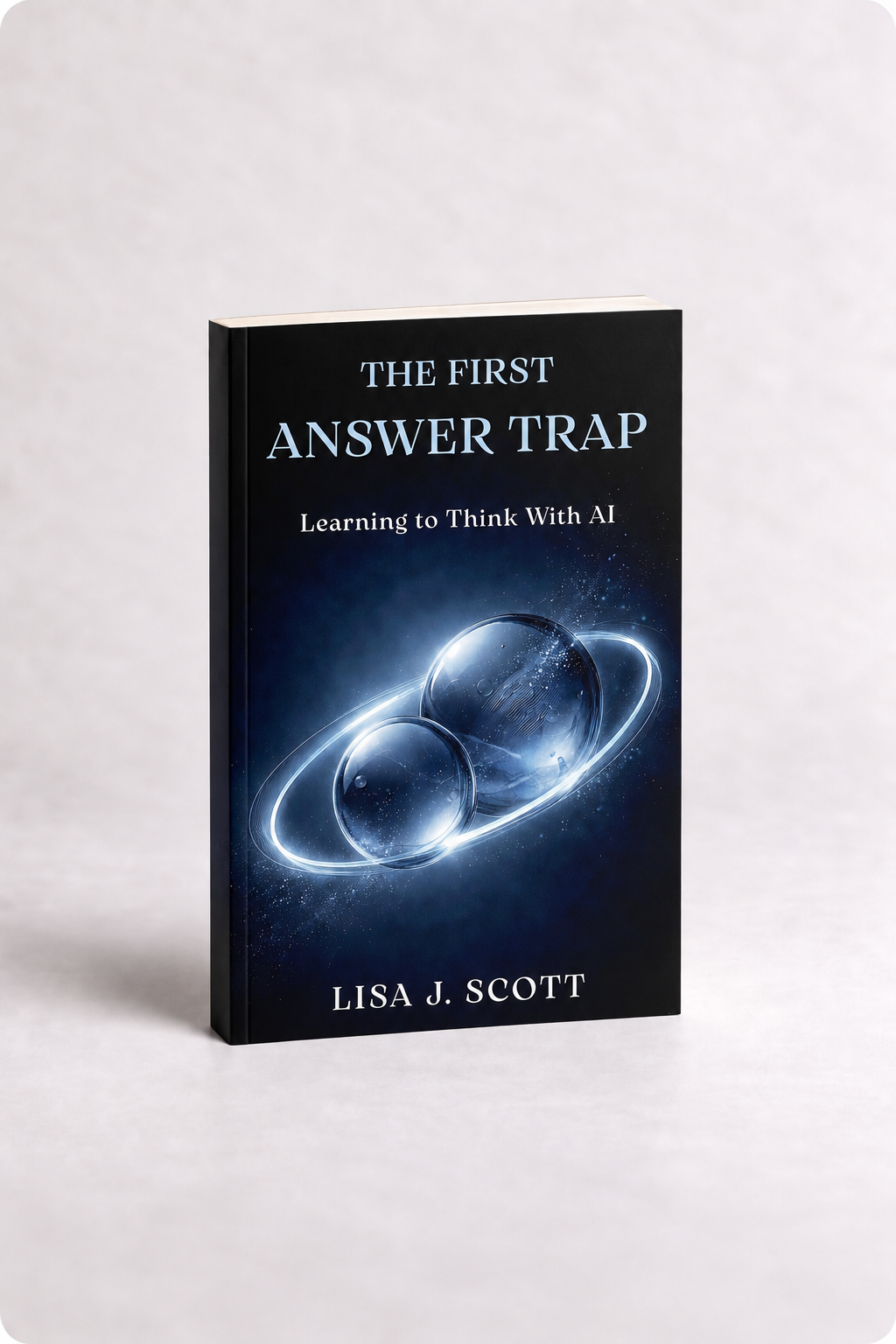
The First Answer Trap: Learning to Think With AI challenges the habit of asking artificial intelligence one question, accepting its first response, and moving on. Lisa J. Scott presents AI not simply as a tool for retrieving answers, but as an interactive thinking environment. Through frameworks including the Google Mind, the Thinking Loop, and the Structural Thinker, she shows how continued dialogue can expose assumptions, reveal contradictions, expand ideas, and deepen understanding. This is a practical guide to preserving human judgment and direction while using AI as a genuine thinking partner.
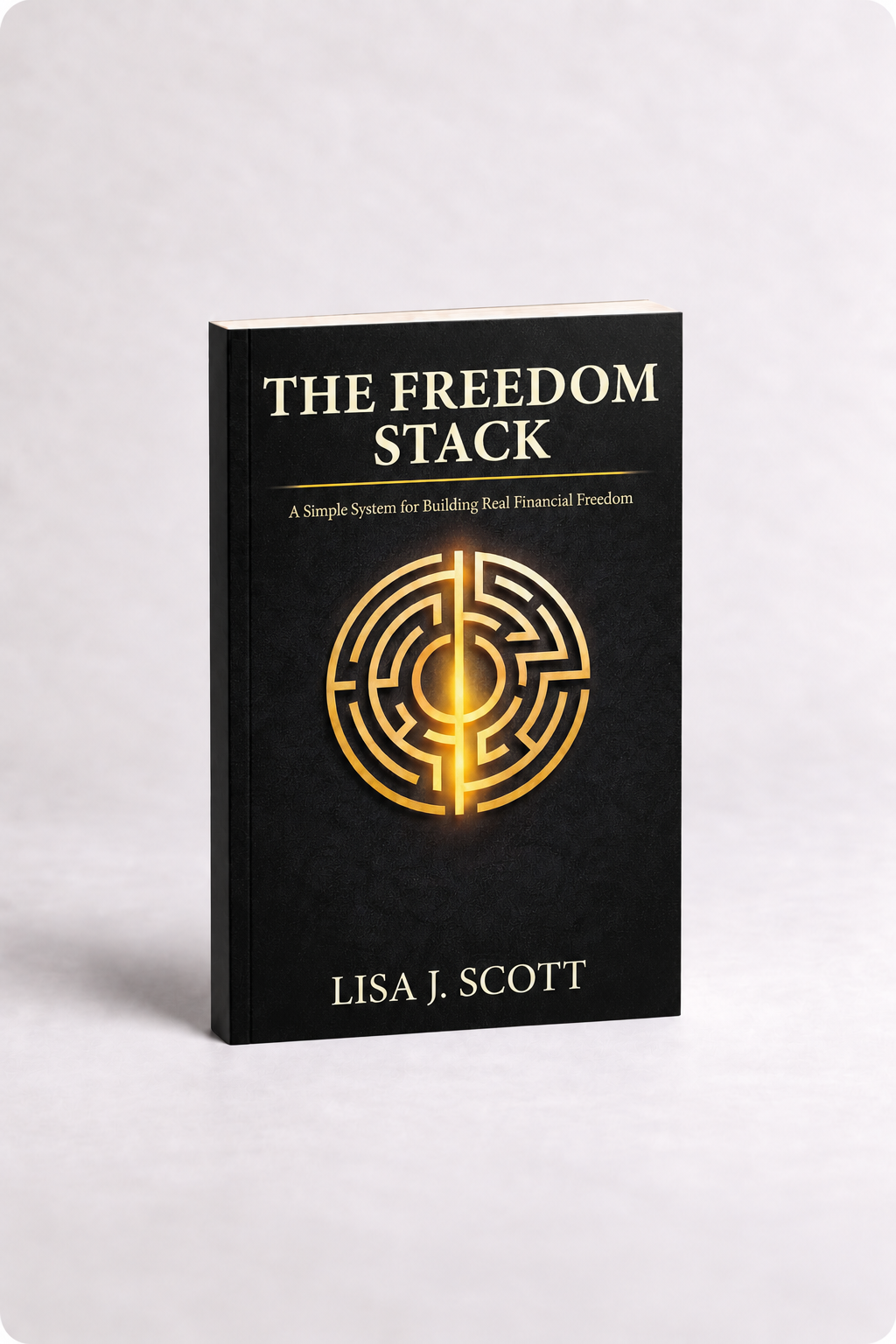
The Freedom Stack: A Simple System for Building Real Financial Freedom reframes financial independence as something constructed deliberately and in the right order. Lisa J. Scott examines how money moves, where structure is missing, and why income alone rarely produces lasting stability. The book shows how to organize income, decisions, and assets into an integrated system that reduces friction, limits dependence, and strengthens control over time. Clear and practical, The Freedom Stack offers a structural approach to financial life—because freedom is not merely a destination someone reaches, but an outcome that emerges when the underlying system works.
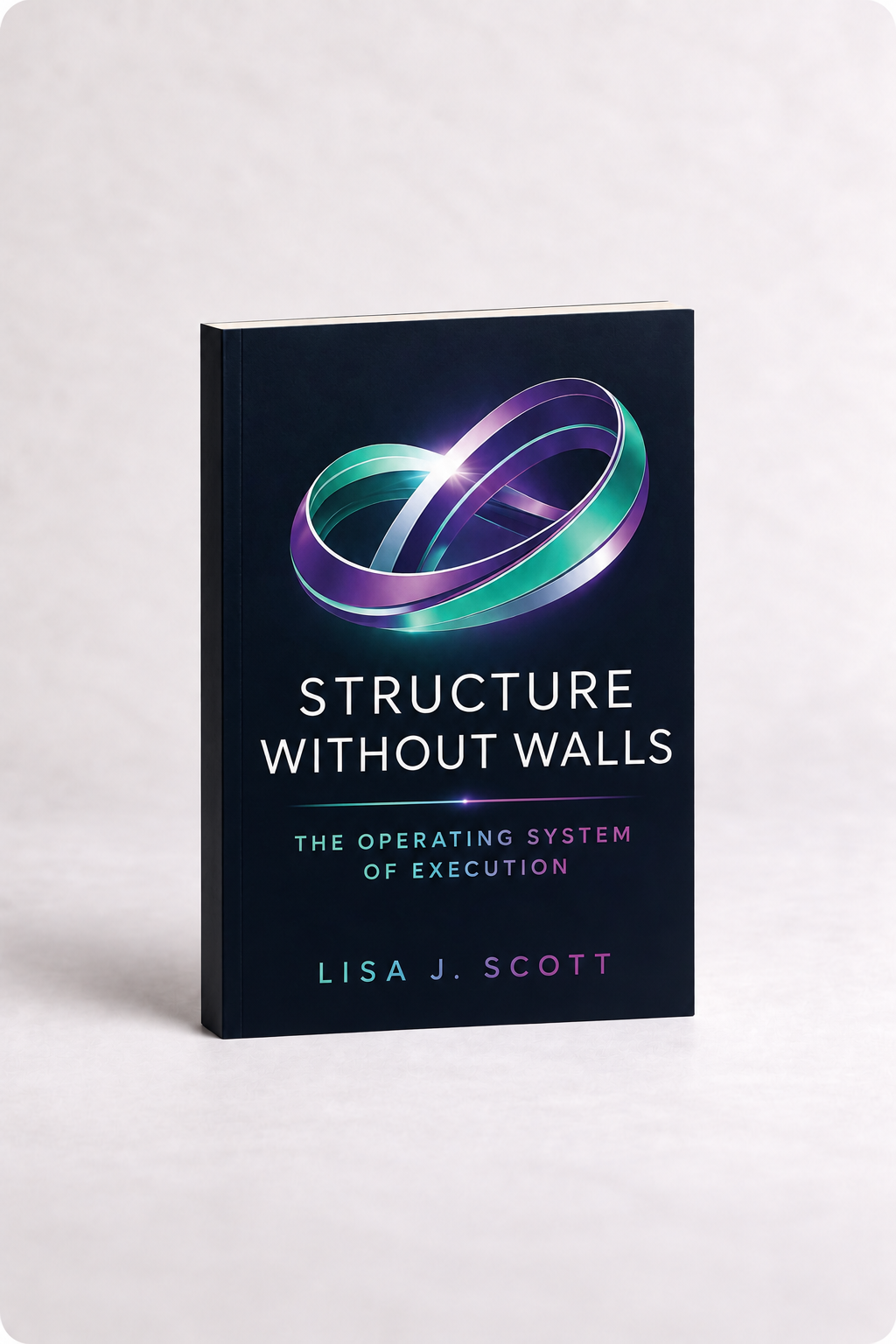
Structure Without Walls: The Operating System of Execution examines why formal roles, processes, and organizational charts often fail to reflect how work actually moves. Lisa J. Scott reframes execution as a fluid system operating across functions, capabilities, people, and moments of overlap. The book reveals where friction, delay, and misalignment develop—and how leaders can design structures that activate the right capabilities at the right time. Concise and practical, it offers a framework for building organizations that remain coordinated under pressure without becoming rigid, hierarchical, or dependent on constant correction.